In the first six months your baby changes faster than at any other time. Every child develops at their own pace, so read this as an overview, not as a checklist. It is based on the guide I give parents in my baby classes, for babies born at term without developmental delays.
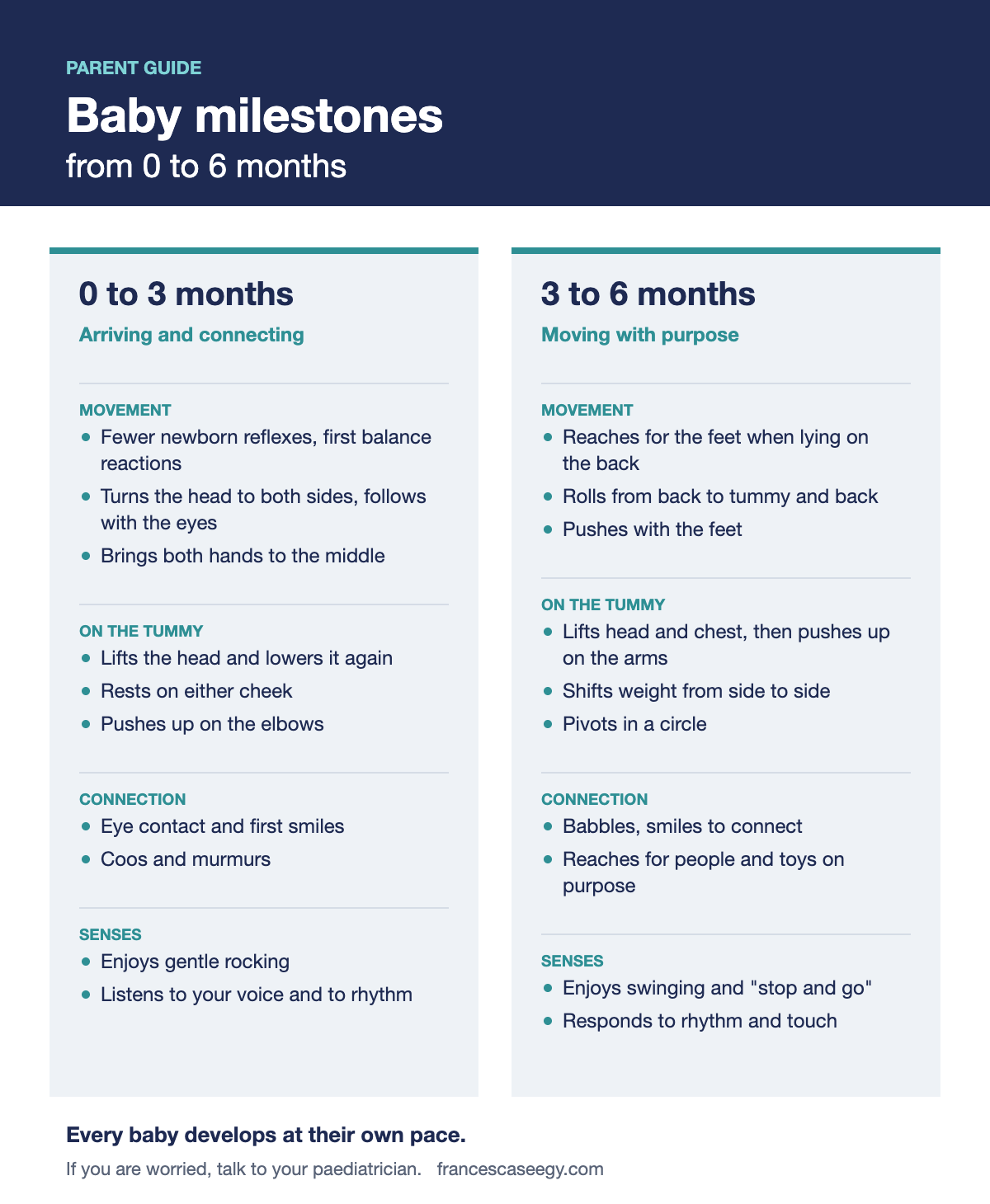
0 to 3 months: arriving and connecting
Your baby is learning to move their body in a more coordinated way. Over these weeks you may notice that your baby:
- shows fewer newborn reflexes and starts to develop balance reactions
- has a more even muscle tone, neither floppy nor stiff
- enjoys being cradled
- lifts the legs when lying on the back
- turns the head to both sides and follows objects with the eyes
- moves arms and legs more symmetrically
- makes eye contact
- brings both hands to the middle of the body, and starts to cross one hand over the midline
On the tummy
- lifts the head by pushing through the pelvis, and lowers it again gently
- turns the head to both sides and rests on either cheek
- pushes up on the elbows
- lies comfortably on either side
- opens and closes the hands and reaches forward with both of them
- stretches and kicks with both legs
Connection and senses
- smiles, coos and murmurs, and cries to show what they need
- reacts to you through touch, sound and movement
- responds to different kinds of touch, from soft stroking to deeper pressure
- enjoys gentle rocking and swinging, and notices changes in speed
- listens to your voice, to music, to soft and loud sounds, and starts to enjoy rhythm
What helps now: the first months are about trust and bonding. Follow your baby's lead, offer different kinds of touch and gentle movement, and enjoy this time of discovery together.
3 to 6 months: moving with purpose
Between three and six months your baby becomes more active, curious and social. Movements become purposeful, and this is where rolling, reaching and playing with people and toys begin.
Movement
- Balance and muscle tone. Posture becomes steadier. Gentle bouncing and shifting, a game we call "Lunapark", trains the balance reactions.
- Hands to feet. Lying on the back, many babies lift their legs and reach for their feet by six months. Help your baby find their feet, from the side or diagonally.
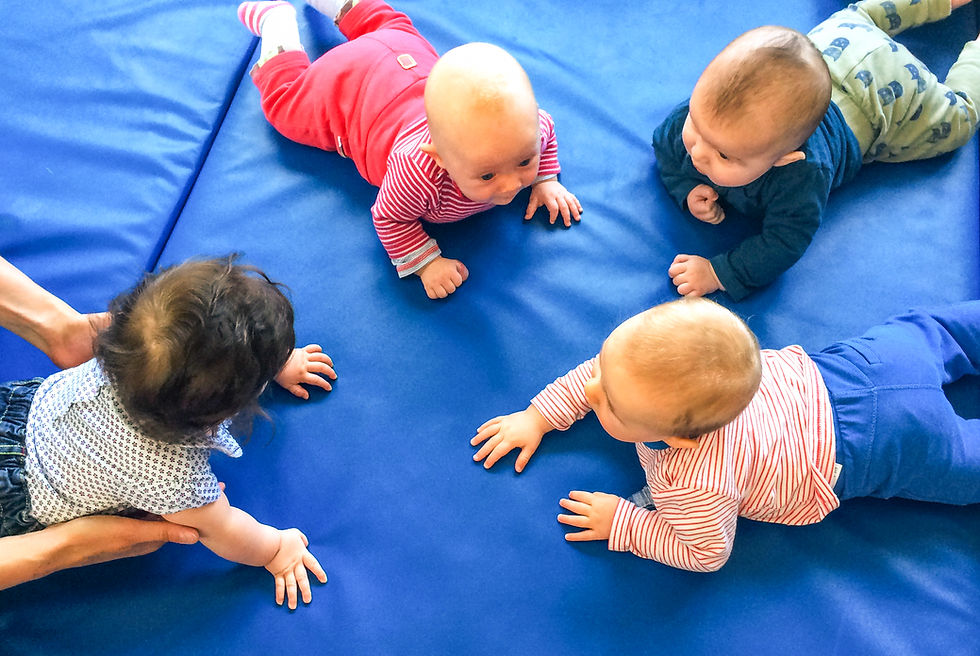
- Tummy time. Your baby lifts head and chest, first on the elbows, then pushing through the arms. A toy at eye level, on the floor or on a therapy ball, keeps it interesting.
- Rolling. From back to tummy and back again. Guide the movement slowly so your baby can feel it.
- Shifting weight. From one side to the other, on the tummy and on the back. A toy held to the side invites reaching sideways.
- Reaching and grasping. With both hands, then towards the mouth. Offer toys in the middle, and later just out of reach.
- Turning on the tummy. The head turns, one knee bends to the same side, and your baby starts to pivot in a circle.
- Pushing with the feet. Against a firm surface, on the back and on the tummy. These are the first steps towards crawling.
Senses
- enjoys different kinds of touch: patting, pressure, rubbing, rolling on a soft surface
- explores movement in space through swinging and bouncing
- feels the body move, for example when you slowly pull them along on a soft mattress
- reacts to "stop and go" changes in speed
- loves your voice most of all, and responds to rhythm, for example gentle tapping along to music
Connection
- babbles and makes first chains of sounds
- smiles to connect and to show pleasure
- looks at the hands and reaches for people and toys on purpose
- may feel unsure with new people, sudden movements or unfamiliar places. Stay close, use gentle touch, and play peekaboo or singing games to help your baby feel safe.
When to ask for advice
Babies reach these steps at different times. If you are worried, for example because your baby clearly prefers one side, really dislikes tummy time or does not seem to move on, talk to your paediatrician. I am also happy to look at your baby together with you.